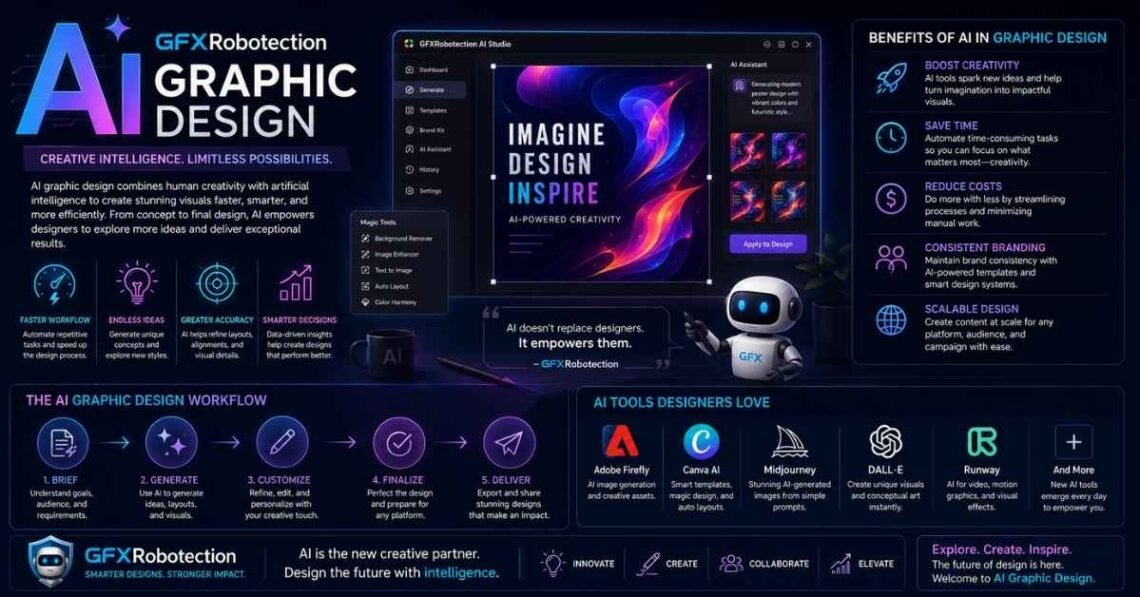
AI Graphic Design GFXRobotection is an AI-powered solution developed by GFXMaker that combines graphic design automation with digital artwork protection. It helps designers, freelancers, agencies, and businesses create professional visuals while adding layers of security such as AI-powered monitoring, invisible digital fingerprinting, metadata management, and creative asset protection. As artificial intelligence continues to reshape the creative industry, tools like GFXRobotection aim to simplify design workflows while helping creators safeguard their intellectual property, brand assets, and digital ownership.
Whether you’re a graphic designer, digital artist, content creator, or marketing agency, understanding how GFXRobotection AI software by GFXMaker works can help you decide whether it fits your creative workflow. This guide explains its features, benefits, limitations, real-world applications, and best practices for protecting your designs in today’s AI-driven landscape.
What Is AI Graphic Design GFXRobotection?
AI Graphic Design GFXRobotection is an AI design software designed to streamline graphic creation while enhancing the protection of digital assets. Unlike traditional design applications that focus only on editing images, GFXRobotection is positioned as a platform that combines creative automation with graphic protection software.
Its primary objective is to help users create, manage, and secure visual content throughout the design lifecycle.
The software is especially relevant for professionals who regularly publish:
- Marketing graphics
- Brand assets
- Social media creatives
- Product images
- Website graphics
- Digital illustrations
- Presentation designs
Instead of relying solely on visible watermarks, the platform incorporates techniques such as digital fingerprinting, metadata tagging, and AI monitoring to strengthen digital asset management.
Understanding GFXRobotection
At its core, GFXRobotection aims to solve two major challenges facing designers today:
- Producing professional-quality graphics efficiently
- Reducing the risk of unauthorized copying or misuse
As AI-generated content becomes more common, creators increasingly worry about:
- AI scraping
- Image plagiarism
- Unauthorized commercial use
- Brand impersonation
- Copyright infringement
- Stolen portfolios
GFXRobotection addresses these concerns by integrating AI-powered graphic design with protective technologies intended to improve ownership tracking and asset security.
Who Developed GFXRobotection?
GFXRobotection is associated with GFXMaker, a platform focused on AI-assisted graphic design and creative productivity.
Its goal is to simplify repetitive design work while helping users manage and protect creative assets across multiple projects.
The software targets:
- Freelance designers
- Creative agencies
- Marketing teams
- Small businesses
- E-commerce brands
- Content creators
- Professional illustrators
Why It Is Gaining Attention
Several trends explain the growing interest in AI graphic design GFXRobotection.
Modern designers face increasing pressure to produce more content in less time while protecting original work from misuse. AI tools have dramatically accelerated content creation, but they have also made copying, modifying, and redistributing digital artwork easier.
Many professionals now look for software that combines:
| Growing Need | How GFXRobotection Addresses It |
|---|---|
| Faster design workflows | AI-assisted automation |
| Asset security | Digital protection tools |
| Copyright awareness | Metadata management |
| Creative collaboration | Cloud-based workflow |
| Brand consistency | AI design assistance |
| Image monitoring | Automated tracking |
Who Should Use This Software?
Although almost anyone creating digital graphics may benefit, it is particularly suitable for:
| User | Primary Benefit |
|---|---|
| Freelancers | Portfolio protection |
| Agencies | Team collaboration |
| Marketing departments | Brand consistency |
| E-commerce stores | Product image security |
| Graphic designers | Creative workflow automation |
| Content creators | Faster visual production |
| Brand managers | Asset management |
Why Graphic Designers Need AI Protection Today
The graphic design industry has changed significantly over the past few years.
Artificial intelligence now enables users to generate logos, illustrations, marketing materials, and social media graphics within minutes. While this improves productivity, it also increases the risk of unauthorized copying and misuse.
Creators increasingly publish their work across websites, marketplaces, and social media platforms, making it easier for images to be downloaded, edited, or reused without permission.
The Rise of AI Image Scraping
AI models often learn from publicly available images, raising ongoing discussions about how creative works are collected and used.
For designers, this creates concerns about:
- Artwork appearing elsewhere without credit
- AI-generated copies of original designs
- Brand assets being reused
- Product images being replicated
- Portfolio theft
These concerns have encouraged many professionals to adopt additional protection measures beyond traditional copyright notices.
Copyright Challenges in the AI Era
Registering copyright remains an important legal safeguard, but legal ownership alone does not automatically prevent unauthorized use.
Designers frequently encounter situations where:
- Images are reposted without permission.
- Logos are modified slightly before reuse.
- Marketing graphics appear on unauthorized websites.
- Product photos are copied by competitors.
Because digital files can be duplicated almost instantly, creators increasingly seek technical solutions alongside legal protections.
Risks of Publishing Artwork Online
Publishing online offers visibility but also exposes creative work to several risks.
These include:
| Risk | Potential Impact |
|---|---|
| Image scraping | Loss of originality |
| Content theft | Revenue loss |
| Brand misuse | Customer confusion |
| Copyright infringement | Legal disputes |
| Fake portfolios | Reputation damage |
| Unauthorized editing | Brand inconsistency |
Understanding these risks helps creators choose appropriate security measures before publishing valuable visual assets.
Why Traditional Protection Methods Are No Longer Enough
Many creators still rely on visible watermarks or embedded metadata. While useful, these methods have limitations.
Visible watermarks may be cropped or edited out, while metadata can sometimes be removed during image processing or file conversion.
As AI-powered editing tools become more advanced, creators increasingly look for layered protection strategies that combine multiple techniques rather than relying on a single method.
How AI Graphic Design GFXRobotection Works
The workflow of AI Graphic Design GFXRobotection combines graphic design automation, creative asset management, and digital protection technologies.
Instead of functioning solely as an editing application, it integrates several intelligent systems intended to improve both productivity and asset security.
A typical workflow follows these stages:
| Stage | Purpose |
|---|---|
| Design creation | Produce visual assets |
| AI optimization | Improve layouts and design quality |
| Digital protection | Apply security measures |
| Metadata integration | Preserve ownership details |
| Publishing | Share assets online |
| Monitoring | Track potential misuse |
AI-Powered Protection Process
After a design is completed, protection features can be applied before publication.
These may include:
- AI-assisted image analysis
- Ownership tagging
- Digital fingerprint generation
- File authentication
- Asset monitoring
This approach aims to strengthen ownership records while making it easier to identify protected files later.
Invisible Digital Fingerprinting
One of the most discussed capabilities is digital fingerprinting.
Unlike traditional visible watermarks, digital fingerprints are designed to remain hidden from normal viewing while helping identify original files.
Potential advantages include:
- Cleaner presentation
- Less visual distraction
- Improved asset tracking
- Stronger ownership verification
Metadata and Asset Tracking
Metadata stores information such as:
- Creator name
- Copyright details
- Project information
- Licensing information
- Creation dates
Proper metadata management supports better organization and may assist with ownership verification when files are distributed across multiple platforms.
Perceptual Hashing Technology
Another technology frequently associated with digital asset protection is perceptual hashing.
Rather than identifying files solely through filenames, perceptual hashing analyzes visual characteristics, allowing systems to recognize images even after resizing or minor modifications.
This can improve monitoring accuracy when tracking similar versions of published artwork.
AI Monitoring for Unauthorized Usage
Some AI-powered monitoring systems periodically search for matching or similar visual assets online.
Instead of manually checking every platform, automated monitoring can help identify:
- Duplicate graphics
- Unauthorized commercial use
- Brand misuse
- Copied illustrations
- Reused marketing materials
While no system can guarantee complete prevention of misuse, monitoring can make detection more efficient.
Image Recognition Workflow
Modern AI image recognition combines several technologies, including:
- Computer Vision
- Machine Learning
- Deep Learning
- Pattern Recognition
- Neural Networks
Together, these technologies analyze visual patterns instead of relying only on filenames or metadata, improving the ability to identify related images across different online platforms.
Key Features of GFXRobotection AI Software
The appeal of GFXRobotection AI software by GFXMaker lies in its ability to combine AI graphic design software with creative asset protection. Rather than acting as a single-purpose editing application, it integrates automation, collaboration, and security into one workflow.
Some of its most notable capabilities are explored in the next section of this guide, including artwork protection, cloud collaboration, batch processing, multi-format compatibility, and workflow optimization for creative professionals.
Continued: AI Graphic Design GFXRobotection
Key Features of GFXRobotection AI Software
Modern creative teams need more than an image editor. They need a platform that improves productivity while protecting valuable digital assets. GFXRobotection AI software by GFXMaker is designed to combine AI-powered graphic design, creative automation, and digital asset security into a unified workflow.
Below are some of its most valuable capabilities.
AI Artwork Protection
One of the platform’s core objectives is helping creators secure their work before it is published online.
Rather than relying solely on visible watermarks, AI-assisted protection may include:
- Invisible digital fingerprinting
- Metadata tagging
- Ownership verification
- Asset authentication
- Image monitoring
This layered approach aims to strengthen digital ownership while maintaining the visual quality of artwork.
Automatic Asset Monitoring
Monitoring hundreds of published graphics manually can be difficult.
AI-assisted monitoring helps simplify this process by tracking visual assets across different platforms and identifying potential unauthorized usage.
This is particularly useful for:
- Marketing campaigns
- Product catalogs
- Agency portfolios
- Corporate branding
- E-commerce listings
Copyright Protection Tools
Although software cannot replace legal copyright registration, it can complement copyright management by helping creators organize ownership information and identify potential misuse.
These tools may assist with:
- Copyright documentation
- Licensing records
- Ownership tracking
- Image verification
- Digital rights management
Invisible Watermarking
Unlike traditional watermarks that cover parts of an image, invisible watermarking focuses on preserving the appearance of the artwork while embedding ownership-related information.
This allows designers to maintain a clean, professional presentation without distracting visible overlays.
Smart Metadata Management
Metadata is often overlooked, yet it plays an important role in digital asset organization.
Proper metadata can include:
| Metadata Element | Purpose |
|---|---|
| Creator name | Ownership identification |
| Copyright notice | Legal reference |
| Project information | Organization |
| License details | Usage rights |
| Keywords | Asset searchability |
| Creation date | Version history |
Maintaining complete metadata improves long-term asset management.
Batch Processing
Creative agencies often handle hundreds of graphics each week.
Batch processing allows repetitive actions to be applied across multiple files simultaneously, helping teams save time while maintaining consistency.
Common examples include:
- Metadata insertion
- Image optimization
- Protection settings
- File exporting
- Asset organization
Cloud-Based Collaboration
Remote teams increasingly rely on cloud collaboration for creative projects.
A collaborative workflow helps:
- Designers
- Marketing teams
- Brand managers
- Content creators
- Clients
work together without constantly exchanging files through email.
Multi-Format File Support
Professional designers work with many file formats.
Typical supported formats may include:
| Raster Formats | Vector Formats | Project Formats |
|---|---|---|
| JPG | SVG | AI |
| PNG | EPS | PSD |
| JPEG | TIFF | |
| WebP | — | — |
Supporting multiple formats allows creators to integrate the software into existing workflows.
How Designers Can Use GFXRobotection
The software is flexible enough to support different creative industries.
Freelancers
Freelancers often publish portfolio work publicly, making protection especially important.
Benefits include:
- Portfolio security
- Faster design workflow
- Client asset organization
- Copyright documentation
Creative Agencies
Agencies frequently manage multiple brands simultaneously.
AI-powered workflow automation helps maintain consistency while reducing repetitive manual work.
Marketing Teams
Marketing departments produce:
- Social media graphics
- Display advertisements
- Email banners
- Landing page visuals
- Campaign assets
Centralized management helps organize these assets more efficiently.
E-commerce Businesses
Online stores rely heavily on original product imagery.
Protecting product photos helps reduce unauthorized copying across marketplaces and competing websites.
Brand Managers
Brand consistency is easier to maintain when all approved visual assets remain organized and traceable.
Digital Artists
Artists publishing illustrations online may benefit from additional ownership verification and asset monitoring.
Photographers
Professional photographers often distribute licensed work to clients.
Managing metadata and licensing information becomes much easier with organized asset management.
Content Creators
YouTubers, bloggers, educators, and social media creators publish graphics daily.
AI-powered workflow automation helps create visual content faster while maintaining organized digital libraries.
Step-by-Step Guide to Using GFXRobotection
Although workflows vary, a typical process follows these stages.
Step 1: Create or Import Your Design
Designs may be created inside compatible software or imported from existing applications.
Common sources include:
- Adobe Photoshop
- Adobe Illustrator
- Canva
- Figma
- CorelDRAW
- Affinity Designer
Step 2: Apply AI Protection
Before publishing, creators can configure available protection settings.
This may include:
- Digital fingerprinting
- Invisible watermarking
- Metadata insertion
- Ownership information
Step 3: Configure Security Settings
Depending on project requirements, users can customize security preferences for individual assets or larger collections.
Step 4: Export Protected Graphics
After configuration, graphics are exported in the desired format while retaining embedded protection data where supported.
Step 5: Publish Your Content
Graphics can then be published on:
- Websites
- Social media
- Online stores
- Client portals
- Marketing campaigns
Step 6: Monitor Online Usage
After publication, monitoring tools may help identify similar or matching visual assets appearing across the web.
Supported Design Platforms
One reason AI-assisted workflows have become popular is their compatibility with existing design ecosystems.
| Platform | Typical Usage |
|---|---|
| Adobe Photoshop | Image editing |
| Adobe Illustrator | Vector graphics |
| Canva | Marketing graphics |
| Figma | UI/UX design |
| CorelDRAW | Illustration |
| Affinity Designer | Professional design |
This flexibility reduces the learning curve for experienced designers.
Benefits of AI Graphic Design GFXRobotection
Adopting AI-assisted design software can improve both productivity and asset protection.
Saves Time
Automation reduces repetitive manual tasks such as resizing, exporting, tagging, and organizing graphics.
Improves Creative Workflow
Instead of switching between multiple tools, creators can manage much of their design process from one centralized environment.
Enhances Brand Asset Security
Companies invest heavily in visual identity.
Protecting:
- Logos
- Product images
- Advertising materials
- Brand guidelines
- Campaign graphics
helps preserve consistency across digital channels.
Supports Better Collaboration
Shared workspaces allow creative teams to work together while keeping assets organized.
Increases Productivity
AI-powered automation can help professionals complete routine tasks faster, leaving more time for creative thinking.
GFXRobotection vs Traditional Protection Methods
Choosing the right protection strategy depends on the value of your creative assets.
| Method | Advantages | Limitations |
|---|---|---|
| Visible Watermark | Easy to recognize | Can be cropped or removed |
| Metadata | Preserves ownership information | Can sometimes be stripped during processing |
| Copyright Registration | Strong legal protection | Does not actively monitor online use |
| Manual Monitoring | Full control | Time-consuming |
| GFXRobotection | Combines automation, monitoring, and asset management | Effectiveness depends on implementation and workflow |
GFXRobotection vs Popular AI Design Tools
Many users compare AI Graphic Design GFXRobotection with other creative platforms.
| Tool | Primary Focus |
|---|---|
| GFXRobotection | Design workflow + asset protection |
| Adobe Firefly | AI image generation |
| Canva AI | Marketing design automation |
| Microsoft Designer | AI-assisted layouts |
| Figma AI | Interface design assistance |
Each platform serves a different purpose, so the best choice depends on your workflow and creative goals.
Security, Privacy, and Copyright Considerations
Many users ask whether software alone can completely protect digital artwork.
The answer is no.
No software can guarantee that images will never be copied.
However, combining technical safeguards with legal protections significantly improves overall security.
A strong protection strategy should include:
- Copyright registration where appropriate
- Metadata management
- Secure cloud storage
- Version history
- Reverse image searches
- Digital fingerprinting
- Regular monitoring
Using multiple layers of protection is generally more effective than relying on a single method.
Pricing, Licensing, and Availability
Before choosing any creative software, evaluate:
- Available subscription plans
- Licensing terms
- Business usage rights
- Team collaboration features
- Storage limits
- Enterprise options
- Customer support
- Trial availability
Selecting a plan that matches your workflow helps maximize long-term value.
Real-World Use Cases
Agency Workflow
A digital agency producing hundreds of marketing graphics each month can automate repetitive design tasks while organizing client assets in one location.
Freelance Portfolio Protection
Freelancers can maintain detailed ownership records for portfolio projects and manage licensing information more efficiently.
E-commerce Product Images
Online retailers benefit from better organization and protection of product photography used across multiple sales channels.
Brand Asset Management
Large organizations can centralize logos, templates, advertising materials, and promotional graphics to improve consistency across teams.
Mini Case Study
Scenario: A growing e-commerce brand creates dozens of promotional graphics every week for its website, email campaigns, and social media. By adopting an AI-assisted design workflow with centralized asset management, the team reduces repetitive editing tasks, keeps branding consistent, and organizes ownership information for every published visual. While this doesn’t eliminate the risk of unauthorized copying, it improves efficiency and makes asset management significantly easier.
Continued: AI Graphic Design GFXRobotection
Limitations and Things to Consider
Although AI Graphic Design GFXRobotection offers several useful capabilities for creative automation, digital asset management, and graphic design protection, no software can provide complete protection against every form of unauthorized use. Understanding its limitations helps users build a stronger and more realistic security strategy.
What GFXRobotection Can Do
The software is designed to support creators by:
- Organizing creative assets efficiently.
- Applying AI-powered graphic design workflows.
- Improving metadata management.
- Helping monitor digital content.
- Supporting ownership verification.
- Streamlining graphic design automation.
These features can reduce manual effort and improve workflow efficiency for graphic designers, marketing teams, digital creators, and creative agencies.
What It Cannot Do
It is equally important to recognize what the software cannot guarantee:
- It cannot legally register copyright on your behalf.
- It cannot completely stop people from downloading or copying images from the internet.
- It cannot guarantee removal of stolen content from third-party websites.
- It cannot prevent every AI model from accessing publicly available images.
- It cannot replace legal advice in copyright disputes.
Using the software alongside legal copyright registration and proper licensing remains the best practice.
Common Challenges Designers Face
The digital creative industry continues to evolve, bringing new challenges for professionals.
AI Copying Artwork
AI-generated content has made it easier to recreate visual styles, logos, and illustrations. While inspiration has always existed in design, unauthorized duplication raises ethical and legal concerns.
Copyright Disputes
Designers occasionally encounter disagreements over ownership, particularly when working with shared assets or client-provided materials. Maintaining organized project records and metadata can help clarify authorship.
Metadata Removal
Some publishing platforms remove metadata during image compression or conversion. Creators should not rely solely on metadata for proving ownership.
Watermark Removal
Visible watermarks discourage casual copying but may be edited out using modern image-editing software. Layering multiple protection methods provides stronger security.
Unauthorized Commercial Use
Businesses sometimes discover their graphics, logos, or product images being used without permission on websites, advertisements, or online marketplaces. Regular monitoring and clear licensing terms help reduce this risk.
Expert Tips to Get the Most from GFXRobotection
Using GFXRobotection AI software by GFXMaker effectively involves more than simply applying protection settings. These best practices can strengthen your overall workflow.
Combine AI Protection with Copyright Registration
Technical protection and legal protection serve different purposes. Registering important creative works where applicable provides stronger legal support if disputes arise.
Keep Original Source Files
Always retain editable files such as PSD, AI, or SVG formats. These files can help demonstrate the creation history of your work.
Organize Your Creative Assets
Maintain consistent file names, folders, version histories, and metadata. Well-organized assets are easier to locate, update, and verify.
Perform Reverse Image Searches
Occasionally using reverse image search tools can help identify where your publicly available graphics appear online.
Educate Your Team
If multiple designers contribute to projects, establish clear workflows for naming conventions, licensing, version control, and publishing procedures.
Future Trends in AI Graphic Design Protection
Artificial intelligence is rapidly changing how creative professionals produce and secure visual content. Several trends are likely to shape the future of AI graphic design software.
- AI-powered content authenticity verification
- Digital provenance standards
- Content Credentials (C2PA) adoption
- Smarter image recognition
- Enterprise digital asset management
- Automated copyright assistance
- Cloud-based creative collaboration
- AI-driven brand governance
These developments are expected to improve transparency and help creators maintain stronger control over their digital assets.
LEARN MORE: Which iPad Should I Buy for Digital Art GFXRobotection
Best Practices Before Publishing Digital Artwork
Following a consistent publishing checklist can reduce common mistakes.
| Best Practice | Why It Matters |
|---|---|
| Save original project files | Preserves editing history |
| Add accurate metadata | Improves organization |
| Verify licensing information | Prevents future disputes |
| Export high-quality images | Maintains professional standards |
| Store backups securely | Protects against data loss |
| Review brand guidelines | Ensures consistency |
| Monitor published assets | Helps identify unauthorized use |
Frequently Asked Questions
What is AI Graphic Design GFXRobotection?
AI Graphic Design GFXRobotection is an AI-assisted workflow associated with GFXMaker that combines graphic design automation, creative asset management, and digital artwork protection to help designers create and organize visual content more efficiently.
Is GFXRobotection a graphic design tool or a protection tool?
It is intended to combine both functions by supporting design workflows while incorporating features aimed at protecting digital assets.
Can GFXRobotection stop AI from stealing artwork?
No software can guarantee complete prevention of unauthorized copying or AI scraping. However, layered protection strategies can improve asset management and make ownership tracking easier.
Does GFXRobotection replace copyright registration?
No. Copyright registration and technical protection serve different purposes. If legal protection is important, copyright registration should still be considered where applicable.
Is GFXRobotection better than traditional watermarks?
Visible watermarks and AI-assisted protection solve different problems. Many professionals use both together as part of a broader content protection strategy.
Which file formats are commonly supported?
Common professional formats include:
- PNG
- JPG
- JPEG
- SVG
- AI
- PSD
- EPS
- TIFF
- WebP
Who can benefit most from this software?
It may be useful for:
- Graphic designers
- Freelancers
- Creative agencies
- Marketing teams
- Brand managers
- Digital artists
- Photographers
- Content creators
- E-commerce businesses
Final Verdict: Is AI Graphic Design GFXRobotection Worth Considering?
As artificial intelligence becomes a standard part of modern creative workflows, protecting original work is becoming just as important as creating it. AI Graphic Design GFXRobotection represents an approach that combines AI-powered graphic design, creative automation, digital asset management, and image protection into one workflow.
For professionals who regularly create marketing graphics, illustrations, branding materials, product images, or digital artwork, having a structured system for organizing assets, managing metadata, and monitoring published content can improve efficiency while supporting better ownership management.
However, it is important to maintain realistic expectations. GFXRobotection should be viewed as one component of a broader protection strategy—not a replacement for legal copyright registration, licensing agreements, secure storage, or responsible publishing practices.
Key Takeaways
- AI Graphic Design GFXRobotection combines graphic design software with digital asset protection.
- It supports creative workflow automation, metadata management, and AI-assisted monitoring.
- It can improve organization and productivity for designers, agencies, and businesses.
- No software can completely eliminate the risk of unauthorized copying.
- Combining technical safeguards, copyright registration, and best practices provides stronger overall protection.
“The strongest protection for creative work comes from combining technology, good asset management, and informed copyright practices—not relying on a single solution.”
Conclusion
The future of graphic design is increasingly powered by artificial intelligence, but creativity still depends on originality, trust, and ownership. Tools like GFXRobotection AI software by GFXMaker reflect the industry’s move toward workflows that not only accelerate design production but also help creators manage and safeguard their digital assets.
Whether you’re a freelancer building a portfolio, an agency managing multiple brands, or a business protecting product imagery, investing in organized workflows, responsible publishing practices, and layered protection methods can help you create with greater confidence. By understanding both the capabilities and the limitations of AI-powered protection, you can make informed decisions that support your creative work today and prepare it for the evolving digital landscape.