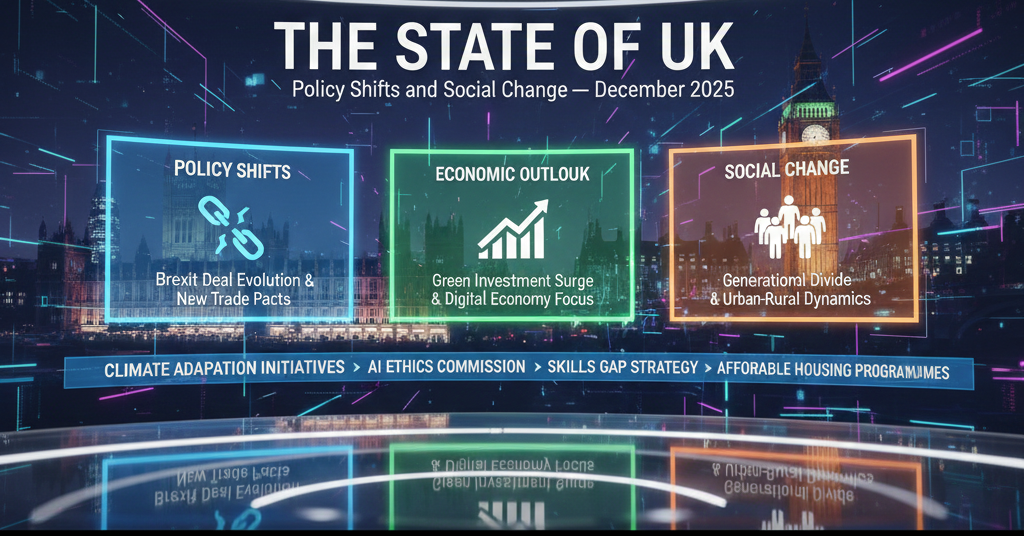
The State of UK is navigating a period of transition as economic pressures, political priorities, and social expectations converge. Although signs of stability have begun to emerge, many households continue to feel the impact of rising living costs, stretched public services, and lingering uncertainty. As the nation moves through 2025, the decisions made today will shape Britain’s future for years to come.
Leadership and Political Direction
The current government has focused on restoring stability and long-term planning after years of political upheaval. Ministers have emphasised fiscal responsibility and institutional reform, presenting themselves as cautious but dependable stewards of public policy. However, critics argue that progress has been too slow, particularly in areas affecting everyday life such as housing, healthcare, and wages.
Parliamentary debate increasingly reflects public frustration, with calls for clearer timelines and measurable outcomes. Local elections on the horizon are adding pressure for visible results rather than policy frameworks.
Economic Reality for Households and Businesses
While inflation has eased, the cost of living remains a dominant concern across the country. Food prices, energy bills, and rents continue to stretch household budgets, particularly for low- and middle-income families. Interest rate reductions have offered limited relief, but consumer confidence remains cautious.
Businesses, especially small and medium-sized enterprises, face higher operating costs and subdued demand. The government has highlighted innovation and productivity as key drivers of growth, with investment directed toward clean energy, digital technology, and advanced manufacturing.
Public Services Facing Ongoing Challenges
Public services remain under intense pressure. The National Health Service continues to struggle with staff shortages and long waiting lists, despite increased funding. Healthcare leaders argue that long-term workforce planning is essential to achieve meaningful improvement.
Education is similarly affected. Schools face recruitment challenges, rising workloads, and increasing student support needs. Universities and colleges also face financial pressures, prompting renewed debate about funding models and access to higher education.
Local councils, responsible for many essential services, are dealing with budget constraints that affect social care, housing, and community support.
Social Change and Public Debate
Social issues continue to dominate public discussion. Immigration, inequality, and national identity remain sensitive topics, often fuelling protest and political debate. Authorities have stressed the importance of maintaining public order while protecting democratic rights.
Community organisations have called for inclusive policies and constructive dialogue, warning that deepening divisions risk long-term social harm. Efforts to tackle hate crime and promote integration remain central to maintaining social cohesion.
Security, Defence and Cyber Risks
The nature of security threats facing the UK continues to evolve. Cybersecurity has become a major concern, with increased focus on protecting digital systems and critical infrastructure. Government agencies are working to strengthen resilience against cyber attacks.
Defence policy remains focused on maintaining readiness and supporting international partners. However, ongoing issues around equipment procurement and long-term planning continue to attract scrutiny.
Britain’s Role on the Global Stage
Internationally, the UK continues to balance diplomatic influence with economic interests. Strengthening alliances, securing trade opportunities, and addressing global challenges such as climate change remain priorities.
Britain’s foreign policy reflects a desire to remain an active global player while adapting to a rapidly changing geopolitical environment.ly these issues are addressed will shape the country’s future in the years to come.
Leave a Reply