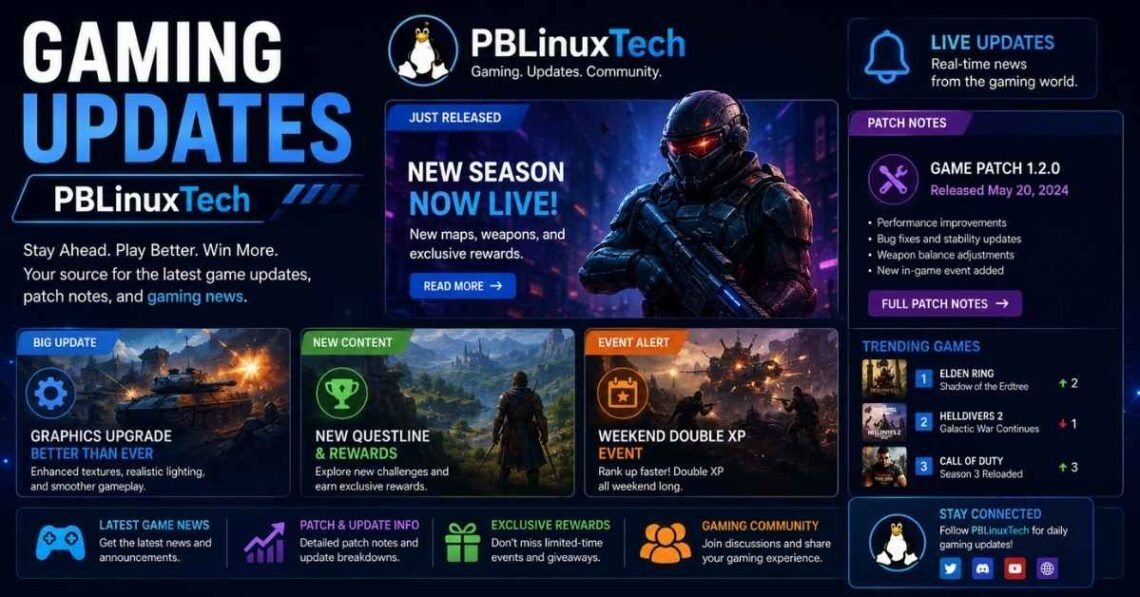
Gaming updates PBLinuxTech is a dedicated resource for gamers who want reliable information about Linux gaming, PC gaming performance, Steam, Proton, Steam Deck, hardware updates, and game optimization. Whether you’re searching for the latest game updates, Linux gaming tutorials, performance tweaks, or compatibility tips, PBLinuxTech aims to simplify complex gaming topics into practical advice. Unlike many websites that simply repeat press releases, it focuses on explaining what each update means, how it affects gameplay, and how you can improve your overall gaming experience.
As Linux gaming continues to grow with tools like Steam Proton, Wine, DXVK, and Vulkan, gamers need trustworthy resources that provide clear guidance instead of confusing technical jargon. This guide explores everything you need to know about Gaming Updates PBLinuxTech, its features, benefits, optimization tips, and why many Linux and PC gamers follow it for regular updates.
What Is Gaming Updates PBLinuxTech?
Gaming Updates PBLinuxTech is a gaming-focused section that covers news, software updates, Linux gaming improvements, hardware developments, optimization techniques, and performance guides. Rather than concentrating only on game announcements, it explains how updates impact real-world gameplay.
Its content generally revolves around:
- Linux gaming news
- PC gaming optimization
- Steam and Steam Deck updates
- Proton compatibility improvements
- Graphics driver updates
- Hardware recommendations
- Performance enhancement guides
- Gaming tutorials
This combination makes it useful for both beginners and experienced Linux users looking to improve their gaming setup.
Why Gamers Follow PBLinuxTech
Gaming websites are everywhere, but not all provide practical value. Many publish quick news summaries without explaining why an update matters.
PBLinuxTech attracts readers because it focuses on helping users solve real gaming problems.
Reliable Gaming News
Instead of only reporting updates, the platform explains:
- What changed
- Why it matters
- Which gamers are affected
- How to benefit from the update
Linux Gaming Expertise
Linux gaming has improved dramatically thanks to projects like Steam Proton, Wine, Mesa Drivers, and Vulkan. These technologies can be confusing for newcomers, so clear explanations are valuable.
Performance Optimization
Many articles include practical suggestions for improving:
- FPS
- System stability
- Driver compatibility
- Loading speeds
- Game responsiveness
Hardware Guidance
Gamers also appreciate recommendations for CPUs, GPUs, RAM, and SSDs that deliver smoother gameplay across modern titles.
Key Features of Gaming Updates PBLinuxTech
The platform covers far more than daily gaming headlines.
| Feature | Why It Matters |
|---|---|
| Gaming News | Stay informed about new releases and updates |
| Linux Gaming Tutorials | Learn how to configure games correctly |
| Steam Proton Guides | Improve Windows game compatibility |
| Hardware Reviews | Choose better gaming components |
| Driver Updates | Enhance graphics performance |
| Performance Guides | Increase FPS and reduce lag |
| Patch Analysis | Understand how updates affect gameplay |
| Optimization Tips | Improve gaming stability |
These categories make the website useful for gamers who want practical information rather than generic news.
Types of Gaming Updates Covered
Modern gaming evolves rapidly, and PBLinuxTech attempts to keep readers informed about several important areas.
AAA Game Releases
Large publishers frequently release updates that improve graphics, fix bugs, and introduce new content.
Examples include:
- Major expansion packs
- Performance patches
- Multiplayer improvements
- Balance changes
Indie Games
Independent developers often launch innovative titles with excellent Linux support.
Coverage may include:
- New releases
- Early Access updates
- Developer announcements
- Optimization improvements
Steam Updates
Steam remains the largest PC gaming platform.
Important updates often involve:
- Interface improvements
- Download optimization
- Library features
- Controller support
- Cloud synchronization
Steam Deck News
The popularity of the Steam Deck has increased interest in Linux gaming.
Topics often include:
- Compatibility improvements
- Battery optimization
- Performance tuning
- SteamOS updates
Proton Improvements
Proton allows many Windows games to run on Linux.
Coverage commonly focuses on:
- Newly supported games
- Compatibility fixes
- Performance enhancements
- Proton GE releases
Graphics Driver Releases
Driver updates from NVIDIA, AMD, and Mesa frequently improve gaming performance.
Keeping drivers current helps reduce crashes and improve frame rates.
Linux Gaming Optimization Tips
Even powerful hardware cannot deliver its best performance without proper optimization.
Choose the Right Linux Distribution
Some Linux distributions are designed with gamers in mind.
Popular choices include:
| Distribution | Best For |
|---|---|
| Ubuntu | Beginners |
| Pop!_OS | NVIDIA users |
| Garuda Linux | Gaming performance |
| Nobara Linux | Optimized gaming |
| Fedora | Developers and gamers |
| Arch Linux | Advanced users |
Each distribution offers different advantages depending on your experience level.
Install Updated Graphics Drivers
Updated drivers can significantly improve:
- Graphics quality
- FPS
- Stability
- Vulkan performance
- Ray tracing support
Both NVIDIA Drivers and AMD Mesa Drivers receive frequent gaming improvements.
Enable Steam Proton
Many Windows-exclusive games now run surprisingly well on Linux using Steam Proton.
Benefits include:
- Expanded game library
- Better compatibility
- Easier installation
- Improved performance
Use GameMode
GameMode automatically optimizes your system while gaming by prioritizing performance.
It can help:
- Increase CPU performance
- Reduce background interruptions
- Improve frame consistency
Monitor Performance with MangoHud
MangoHud provides real-time information such as:
- FPS
- CPU usage
- GPU usage
- RAM utilization
- VRAM consumption
- Frame timing
Monitoring these metrics helps identify performance bottlenecks.
Optimize Shader Cache
Shader compilation can cause stuttering.
Proper shader caching helps:
- Reduce loading times
- Eliminate micro-stutters
- Improve frame pacing
- Create smoother gameplay
Best Gaming Tools Recommended for Linux Users
Linux gamers have access to powerful open-source utilities that make gaming easier and more stable.
| Tool | Purpose |
|---|---|
| Steam | Primary game platform |
| Proton | Windows compatibility |
| Proton GE | Enhanced compatibility |
| Lutris | Manage multiple game libraries |
| Heroic Games Launcher | Epic Games support |
| Wine | Windows application compatibility |
| DXVK | DirectX translation |
| VKD3D-Proton | DirectX 12 support |
| MangoHud | Performance monitoring |
| GameMode | Automatic optimization |
| Gamescope | Better display scaling |
Using the right combination of these tools can dramatically improve your Linux gaming experience.
Hardware Recommendations for Better Gaming
Software optimization is important, but hardware still plays a major role in gaming performance.
Graphics Cards
Modern GPUs from NVIDIA and AMD offer excellent support for Linux.
Choose a GPU based on:
- Resolution
- VRAM
- Driver compatibility
- Power efficiency
Processors
Gaming performance benefits from modern multi-core processors.
Recommended options include:
- Intel Core i5 and above
- AMD Ryzen 5 and above
Higher core counts also improve multitasking during gameplay.
Memory
For modern gaming:
| RAM | Suitable For |
|---|---|
| 8 GB | Casual gaming |
| 16 GB | Recommended |
| 32 GB | Streaming and multitasking |
Storage
Installing games on an NVMe SSD reduces:
- Loading times
- Texture pop-in
- Installation delays
- Update times
Compared with traditional hard drives, SSDs provide a much smoother gaming experience.
Performance Tips for Linux Gamers
Small optimizations often produce noticeable improvements.
Improve FPS
Try these proven techniques:
- Keep graphics drivers updated.
- Use the latest Proton version.
- Enable GameMode.
- Install games on an SSD.
- Close unnecessary background applications.
Reduce Input Lag
Low input latency creates a more responsive experience.
Helpful adjustments include:
- Enabling gaming mode
- Using high refresh rate monitors
- Updating controller firmware
- Optimizing graphics settings
Monitor Resource Usage
Regularly monitor:
- CPU utilization
- GPU utilization
- RAM usage
- VRAM usage
- Temperature
- Power consumption
Performance monitoring tools help detect issues before they affect gameplay.
Mini Case Study: Boosting Linux Gaming Performance
A gamer using Pop!_OS, Steam Proton, and GameMode noticed frequent frame drops while playing a modern AAA title. After updating Mesa drivers, enabling shader pre-caching, and moving the game from an HDD to an NVMe SSD, average performance improved significantly, loading times were reduced, and gameplay became noticeably smoother. This illustrates how a combination of software optimization and hardware improvements can have a greater impact than changing graphics settings alone.
“Optimizing your gaming setup isn’t about one magic tweak—it’s about combining the right drivers, tools, and hardware for consistent performance.”
Steam Deck and Portable Gaming
The Steam Deck has transformed Linux gaming by bringing a handheld PC experience to millions of players. Since it runs on SteamOS, many of the optimization techniques discussed by Gaming Updates PBLinuxTech also apply to Steam Deck users.
Improve Steam Deck Performance
For the best experience:
- Keep SteamOS updated.
- Use the latest Proton or Proton GE version for unsupported games.
- Install games on a fast NVMe SSD when possible.
- Enable shader pre-caching to reduce stuttering.
- Lower graphics settings in demanding AAA games to achieve smoother frame rates.
Many popular Windows games now run well on Steam Deck thanks to continuous improvements in Proton compatibility.
Gaming Security Best Practices
Performance matters, but security is equally important.
Protect Your Gaming Accounts
Follow these simple practices:
- Enable two-factor authentication (2FA) on Steam and other gaming platforms.
- Download games only from trusted sources.
- Keep your operating system and drivers updated.
- Back up saved games using Steam Cloud or another cloud backup solution.
- Avoid unofficial patches unless they come from trusted developers.
A secure gaming environment reduces the risk of malware, account theft, and data loss.
PBLinuxTech vs Other Gaming Websites
Different gaming websites serve different audiences. Here’s a quick comparison.
| Feature | PBLinuxTech | GamingOnLinux | PC Gamer | IGN | Tom’s Hardware |
|---|---|---|---|---|---|
| Linux Gaming Focus | Excellent | Excellent | Limited | Limited | Moderate |
| PC Hardware Coverage | Good | Moderate | Excellent | Moderate | Excellent |
| Performance Tips | Excellent | Good | Good | Limited | Excellent |
| Game Reviews | Moderate | Good | Excellent | Excellent | Limited |
| Beginner Guides | Good | Moderate | Good | Moderate | Limited |
| Steam Deck Coverage | Good | Excellent | Good | Limited | Moderate |
PBLinuxTech stands out by combining Linux gaming tutorials, optimization advice, and gaming news in one place.
Benefits of Following Gaming Updates PBLinuxTech
Following a specialized gaming resource offers several advantages.
Stay Ahead of Game Updates
You’ll learn about:
- New game releases
- Major patches
- Driver improvements
- Steam updates
- Proton compatibility changes
Improve Gaming Performance
Optimization articles help players:
- Increase FPS
- Reduce stuttering
- Lower input latency
- Improve graphics quality
- Optimize system resources
Learn New Gaming Techniques
Regular tutorials explain advanced concepts in a beginner-friendly way, making Linux gaming more accessible.
Limitations You Should Know
No platform is perfect, and it’s useful to understand where PBLinuxTech may have limitations.
- Some content is focused primarily on Linux users.
- Not every game release receives detailed coverage.
- Hardware reviews may not be as extensive as dedicated hardware websites.
- Breaking news may appear later than on large gaming publications.
Knowing these limitations helps readers use multiple trusted sources when researching major gaming developments.
Common Gaming Problems and Solutions
Many Linux gamers encounter similar issues. Fortunately, most have straightforward fixes.
| Problem | Possible Solution |
|---|---|
| Game won’t launch | Update Proton or Wine |
| Low FPS | Update graphics drivers and enable GameMode |
| Screen tearing | Enable FreeSync or G-Sync if supported |
| Audio issues | Check PulseAudio or PipeWire settings |
| Controller not detected | Update Steam Input configuration |
| Shader stuttering | Enable shader pre-caching |
| Driver conflicts | Install the latest NVIDIA or AMD Mesa drivers |
Troubleshooting systematically often resolves performance issues without requiring new hardware.
Expert Tips to Get the Most from PBLinuxTech
To maximize the value of gaming updates:
- Read optimization guides after major driver releases.
- Compare Proton compatibility before buying new games.
- Bookmark tutorials for future reference.
- Monitor your system using MangoHud.
- Update GPU drivers regularly.
- Follow Steam Deck optimization recommendations.
- Test graphics settings instead of relying on default presets.
Small adjustments can make a noticeable difference over time.
How We Evaluated Gaming Updates PBLinuxTech
This guide is based on what users generally expect from a trustworthy gaming resource and on the broader Linux gaming ecosystem.
The evaluation considered:
- Content usefulness
- Linux gaming expertise
- Performance optimization advice
- Coverage of Steam, Proton, and Steam Deck
- Practical troubleshooting information
- Ease of understanding for beginners
Rather than focusing only on gaming news, the emphasis is on providing actionable information that readers can immediately apply.
Recent Gaming Trends Worth Following
Gaming continues to evolve rapidly, and these trends are shaping the future of Linux and PC gaming.
AI-Powered Game Optimization
Artificial intelligence is increasingly used to improve graphics, automate settings, and optimize performance.
Cross-Platform Gaming
More games now support cross-platform multiplayer, allowing Linux, Windows, and console players to play together.
Cloud Gaming
Cloud services reduce hardware requirements while making high-end gaming accessible on more devices.
Graphics Technologies
Modern technologies include:
- Ray Tracing
- DLSS
- AMD FSR
- Intel XeSS
These features continue to improve visual quality and performance across supported hardware.
Essential Linux Gaming Terms
Understanding these terms makes gaming guides easier to follow.
| Term | Meaning |
|---|---|
| Proton | Compatibility layer for Windows games |
| Wine | Runs Windows applications on Linux |
| Vulkan | Modern graphics API |
| Mesa | Open-source graphics drivers |
| FPS | Frames Per Second |
| VRAM | Graphics memory |
| GameMode | Automatic system optimization tool |
| MangoHud | Performance monitoring overlay |
| DXVK | Converts DirectX to Vulkan |
| Gamescope | Display and scaling utility |
Beginner’s Linux Gaming Checklist
Before installing your first game, make sure you have:
- Updated your Linux distribution.
- Installed the latest graphics drivers.
- Enabled Steam Proton.
- Installed GameMode.
- Installed MangoHud.
- Verified game compatibility through ProtonDB.
- Enabled shader pre-caching.
- Installed games on an SSD whenever possible.
Completing this checklist helps create a smoother gaming experience from the start.
LEARN MORE: News PBLinuxTech
Common Myths About Linux Gaming
Several misconceptions still discourage people from trying Linux for gaming.
Myth 1: Linux Can’t Run AAA Games
Modern compatibility tools allow many popular AAA titles to run successfully.
Myth 2: Linux Is Only for Developers
Today’s Linux distributions are much easier to install and use than in the past.
Myth 3: Gaming Performance Is Always Worse
Performance depends on the game, hardware, drivers, and optimization. In some cases, Linux performs similarly to or even better than Windows.
Myth 4: Steam Doesn’t Support Linux
Steam offers native Linux support and continues to expand compatibility through Proton.
The Future of Gaming Updates PBLinuxTech
Linux gaming is advancing rapidly, and resources like Gaming Updates PBLinuxTech are likely to become even more valuable.
Future developments may include:
- Better Proton compatibility
- Improved SteamOS updates
- Wider handheld gaming support
- More AI-assisted optimization tools
- Enhanced graphics technologies
- Better driver performance
- Increased support for AAA games on Linux
As the Linux gaming ecosystem grows, staying informed will become increasingly important for both casual and competitive players.
Frequently Asked Questions
What is Gaming Updates PBLinuxTech?
Gaming Updates PBLinuxTech is a gaming-focused resource that covers Linux gaming news, optimization guides, hardware recommendations, Steam updates, Proton compatibility, and performance tips.
Is PBLinuxTech trustworthy?
Its usefulness depends on the quality and accuracy of individual articles. Readers should compare important technical information with official documentation when making system changes.
Does PBLinuxTech only focus on Linux gaming?
Linux gaming is a major focus, but many optimization techniques are also relevant to general PC gamers.
Is PBLinuxTech free?
The content is generally available online without requiring a paid subscription.
Does it cover Steam Deck?
Yes. Steam Deck optimization, compatibility, and performance improvements are commonly discussed alongside Linux gaming topics.
Which Linux distribution is best for gaming?
Popular choices include Ubuntu, Pop!_OS, Garuda Linux, Fedora, and Nobara Linux, depending on your experience level and hardware.
Conclusion
Gaming Updates PBLinuxTech has become a useful destination for players who want more than basic gaming headlines. By covering Linux gaming, Steam, Steam Deck, Proton, hardware optimization, graphics drivers, and performance tuning, it helps readers understand not only what has changed but also how those changes affect real gameplay.
Whether you’re a beginner exploring Linux gaming for the first time or an experienced PC enthusiast looking to improve FPS, reduce latency, or optimize your gaming setup, staying informed through reliable resources can make a significant difference. Combining updated drivers, modern tools like GameMode and MangoHud, and practical optimization techniques will help you enjoy a smoother, more stable gaming experience.
Key Takeaway: The best gaming experience doesn’t come from a single tweak—it comes from staying informed, using the right tools, keeping your system updated, and applying proven optimization techniques consistently.