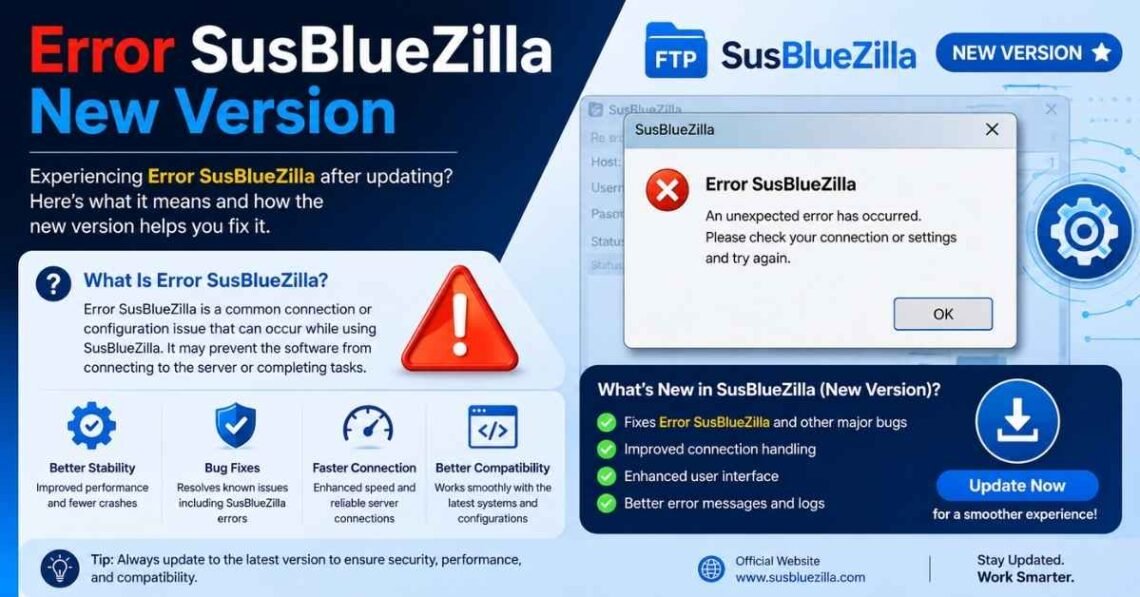
Have you recently updated SusBlueZilla only to run into unexpected problems? Error SusBlueZilla new version typically occurs because of incompatible system files, corrupted installation data, outdated drivers, software conflicts, or incorrect configuration settings after an update. While the error can interrupt your workflow, it is usually fixable with a few troubleshooting steps.
In this guide, we’ll explain the most common causes of the error SusBlueZilla new version, walk through practical solutions, and share tips to prevent the issue from returning.
What Is the Error SusBlueZilla New Version?
The error SusBlueZilla new version refers to problems users experience after installing or updating the latest release of SusBlueZilla software. Depending on the system and software version, the error may appear as:
- The application won’t launch.
- Frequent crashes after startup.
- Installation failures.
- Update errors.
- Performance issues or freezing.
- Missing files or configuration errors.
In many cases, the issue is related to the update process rather than the software itself.
Common Causes of Error SusBlueZilla New Version
Understanding the root cause makes troubleshooting much easier.
1. Corrupted Installation Files
If the installation package downloads incorrectly or becomes damaged during installation, important program files may be missing.
This can lead to:
- Startup failures
- Unexpected crashes
- Missing DLL errors
- Incomplete updates
Downloading a fresh installation package often resolves the issue.
2. Incompatible Operating System
Some software updates require newer operating system versions.
If your computer doesn’t meet the latest requirements, compatibility issues may occur after updating.
Before installing updates, verify that your system satisfies the recommended specifications.
3. Outdated Device Drivers
Drivers help your operating system communicate with hardware components.
Old graphics, chipset, or storage drivers can sometimes conflict with newly updated software.
Keeping drivers current improves compatibility and system stability.
4. Software Conflicts
Background applications occasionally interfere with newly installed programs.
Potential conflicts include:
- Antivirus software
- Firewall settings
- System optimization utilities
- Security monitoring tools
- Other applications using the same resources
Temporarily disabling conflicting software during installation may help identify the cause.
5. Corrupted Configuration Files
When settings from an older version carry over incorrectly, the new version may fail to load properly.
Resetting or recreating configuration files often fixes launch problems.
Signs You Are Experiencing the Error
The error SusBlueZilla new version may present itself in different ways.
Common symptoms include:
- Software closes immediately after opening
- Blank startup screen
- Error messages during installation
- Extremely slow performance
- Features not responding correctly
- Automatic shutdowns
- Failed updates
Identifying these symptoms early helps narrow down the correct solution.
How to Fix Error SusBlueZilla New Version
Try the following solutions in order. In many cases, one of these steps resolves the problem.
Restart Your Computer
Although simple, restarting your computer clears temporary processes that may interfere with the software.
After restarting:
- Launch the application again.
- Check whether the issue persists.
- Verify that no background installation is still running.
Reinstall the Software
A clean installation often resolves corrupted file issues.
Follow these steps:
- Uninstall SusBlueZilla completely.
- Restart your computer.
- Download the latest installer from the official source.
- Install the software again.
- Launch the application.
A clean reinstall removes damaged files left behind during previous installations.
Check for Software Updates
Developers frequently release patches after launching a major version.
These updates may include:
- Bug fixes
- Stability improvements
- Compatibility updates
- Security enhancements
Installing the newest patch may eliminate known issues.
Update Windows and Drivers
Outdated operating systems sometimes struggle with newer software versions.
Check for updates to:
- Windows
- Graphics drivers
- Chipset drivers
- Network drivers
Keeping your system current improves compatibility.
Run as Administrator
Permission-related issues may prevent the application from accessing required system resources.
To test this:
- Right-click the program.
- Select Run as Administrator.
- Check whether the error disappears.
If it works correctly, adjust the application’s compatibility settings.
Disable Antivirus Temporarily
Some antivirus programs mistakenly block newly installed applications.
Temporarily disabling real-time protection during installation can determine whether security software is causing the problem.
Remember to enable protection again after testing.
Advanced Troubleshooting Tips
If basic fixes don’t solve the issue, consider these additional methods.
Clear Temporary Files
Removing temporary files can eliminate corrupted cached data.
Use your operating system’s built-in disk cleanup tools to remove:
- Temporary installation files
- Update cache
- Log files
- Temporary system data
This process also frees up storage space.
Check System Requirements
Before blaming the software, confirm your hardware meets the minimum requirements.
Verify:
- Processor
- RAM
- Storage
- Operating system version
- Graphics compatibility
Running software below its required specifications often causes instability.
Review Error Logs
Many applications generate diagnostic logs when problems occur.
These logs may identify:
- Missing files
- Permission errors
- Driver conflicts
- Failed updates
Technical support teams can also use these logs for faster troubleshooting.
Best Practices to Prevent Future Errors
You can reduce the risk of future update problems by following a few simple habits.
- Always back up important data before major updates.
- Download software only from official sources.
- Keep Windows updated.
- Install the latest hardware drivers.
- Avoid interrupting software installations.
- Restart your system after significant updates.
- Remove unused applications that may create conflicts.
Preventive maintenance often saves time later.
Common Mistakes to Avoid
Many users accidentally make troubleshooting more difficult.
Avoid these common mistakes:
- Installing multiple versions simultaneously
- Downloading unofficial installers
- Ignoring update requirements
- Deleting system files manually
- Skipping system restarts
- Disabling security software permanently
Taking a careful approach reduces the chance of further problems.
LEARN MORE: DowsStrike2045 Python
When to Contact Support
If you’ve completed every troubleshooting step and the error SusBlueZilla new version still appears, it may require assistance from the software developer.
Before contacting support, collect:
- Software version
- Operating system version
- Error screenshots
- Installation logs
- System specifications
Providing detailed information helps support teams diagnose the issue more quickly.
FAQs
What causes the error SusBlueZilla new version?
The error is commonly caused by corrupted installation files, software conflicts, outdated drivers, incompatible operating systems, or damaged configuration files after an update.
Can reinstalling fix the error?
Yes. A clean reinstall often replaces corrupted files and resolves installation-related issues.
Is the error caused by Windows updates?
Not always. However, compatibility issues between certain Windows versions and software updates can contribute to the problem.
Should I update my drivers?
Yes. Updated drivers improve compatibility and often resolve crashes or startup issues associated with newly updated software.
How can I prevent update errors in the future?
Keep your operating system and drivers current, download software from official sources, back up important files, and install updates without interruptions.
Conclusion
The error SusBlueZilla new version can be frustrating, but it is usually caused by issues such as corrupted installation files, outdated drivers, software conflicts, or compatibility problems rather than a permanent software defect. Fortunately, most users can resolve the issue by performing a clean reinstall, updating their system, checking drivers, and ensuring they are using the latest official release.
If the problem continues after trying these solutions, gather your error details and contact the software’s support team for further assistance. Staying proactive with updates, backups, and routine system maintenance will help you avoid similar issues and keep your software running smoothly.