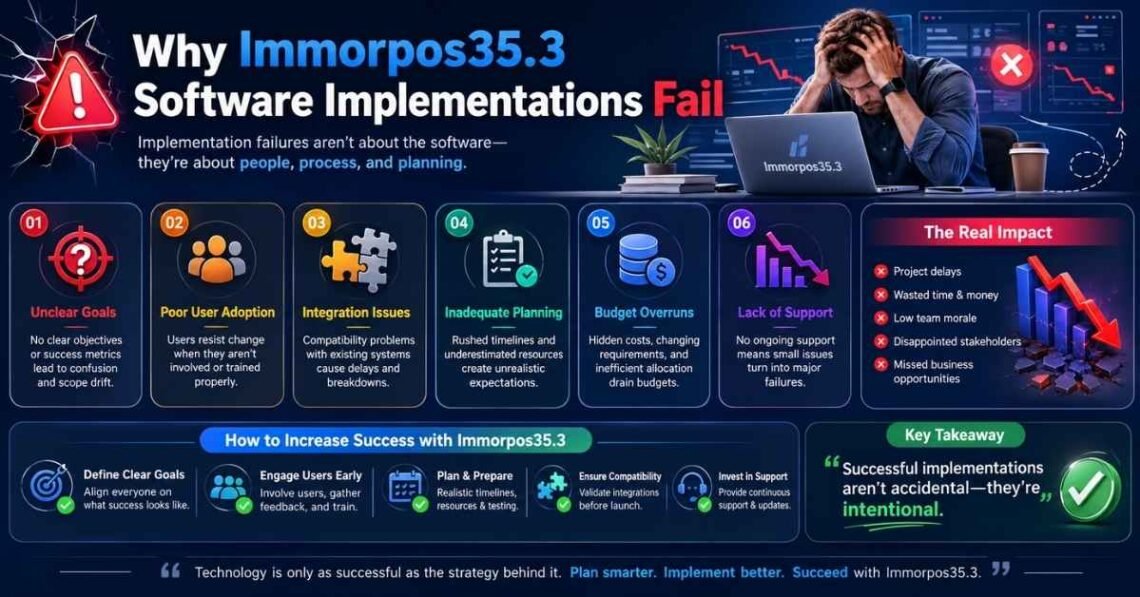
Why immorpos35.3 software implementations fail is a question many businesses ask after experiencing delays, budget overruns, or poor user adoption. In most cases, these failures are not caused by the software itself. Instead, they result from weak planning, poor communication, insufficient training, integration issues, and unrealistic expectations. Understanding these challenges helps organizations avoid costly mistakes and achieve a successful software implementation.
Whether you’re upgrading an existing system or introducing new business software, knowing what can go wrong is the first step toward long-term success.
Understanding Immorpos35.3 Software Implementation
Before exploring the reasons for failure, it’s important to understand what software implementation actually involves.
Software implementation is the complete process of installing, configuring, testing, integrating, and deploying a software solution within an organization. It also includes employee training, data migration, performance testing, and ongoing support.
A successful implementation requires both technical expertise and effective project management.
Top Reasons Why Immorpos35.3 Software Implementations Fail
Several factors contribute to unsuccessful software deployments. Most failed projects involve more than one issue rather than a single mistake.
1. Poor Project Planning
Many implementation failures begin before the software is even installed.
Without a detailed implementation roadmap, organizations often struggle with:
- Undefined project scope
- Unrealistic deadlines
- Missing milestones
- Poor resource allocation
- Lack of contingency planning
A well-structured project plan minimizes risks and keeps everyone aligned throughout the implementation process.
2. Unclear Business Requirements
Software should solve business problems—not create new ones.
When stakeholders fail to define their objectives, implementation teams may configure the software incorrectly. As a result, the final system doesn’t meet operational needs.
Before implementation begins, businesses should identify:
- Business goals
- Required features
- Workflow requirements
- Reporting needs
- Compliance requirements
Clear documentation significantly reduces project confusion.
3. Weak Leadership Support
Executive involvement plays a major role in implementation success.
If leadership fails to support the project, departments often prioritize daily operations over implementation activities. Consequently, delays increase and employee engagement declines.
Strong leadership helps:
- Allocate budgets
- Resolve conflicts
- Encourage adoption
- Remove organizational obstacles
Projects with executive sponsorship generally achieve higher success rates.
Insufficient Employee Training
Technology only delivers value when people know how to use it.
One of the biggest reasons why immorpos35.3 software implementations fail is inadequate user training.
Employees who receive little guidance often:
- Avoid using the system
- Continue old workflows
- Enter incorrect data
- Become frustrated
Organizations should provide:
- Hands-on workshops
- User manuals
- Video tutorials
- Practice environments
- Ongoing technical support
Proper training increases user confidence and improves productivity.
Poor Change Management
Every software implementation changes how employees perform daily tasks.
Unfortunately, many organizations underestimate employee resistance.
Without proper change management:
- Staff may reject new workflows.
- Productivity temporarily decreases.
- User adoption remains low.
- Teams return to legacy systems.
Effective change management includes frequent communication, employee involvement, and continuous feedback throughout the project.
Data Migration Problems
Migrating data is often one of the most complex stages of implementation.
Common migration issues include:
- Missing records
- Duplicate data
- Formatting errors
- Corrupted databases
- Incomplete transfers
Before migration, organizations should clean existing data, perform test migrations, and verify data accuracy.
Accurate information ensures the new system functions correctly from day one.
Integration Challenges
Modern businesses rarely rely on a single software application.
Immorpos35.3 may need to connect with:
- Accounting software
- CRM systems
- Inventory management
- Payment gateways
- Reporting tools
If these integrations fail, business operations become fragmented.
Therefore, integration testing should occur well before deployment.
Lack of Communication Between Teams
Successful software implementation depends on collaboration.
When IT teams, management, vendors, and employees fail to communicate, misunderstandings quickly develop.
Common communication problems include:
- Conflicting priorities
- Missed deadlines
- Incorrect configurations
- Delayed approvals
Regular meetings and project updates help everyone stay informed.
Unrealistic Expectations
Some organizations expect immediate improvements after installation.
However, software implementation is a gradual process.
Benefits such as improved efficiency, automation, and better reporting often require weeks or months of optimization.
Setting realistic expectations prevents unnecessary disappointment.
Budget Constraints
Many projects fail because organizations underestimate total implementation costs.
Beyond purchasing software, businesses should budget for:
- Training
- Data migration
- Technical support
- Hardware upgrades
- System customization
- Maintenance
Proper financial planning reduces the risk of unfinished implementations.
Inadequate Testing Before Launch
Skipping testing may save time initially, but it often creates bigger problems later.
Testing should include:
- Functional testing
- User acceptance testing
- Security testing
- Performance testing
- Integration testing
Comprehensive testing identifies issues before employees encounter them.
Signs an Implementation Is Heading Toward Failure
Watch for these warning signs during implementation:
- Constant deadline extensions
- Increasing project costs
- Low employee participation
- Frequent technical issues
- Poor communication
- Scope changes without approval
- Low user adoption
Recognizing these indicators early allows teams to take corrective action.
Best Practices to Prevent Implementation Failure
Organizations can significantly improve success rates by following proven implementation strategies.
Build a Strong Implementation Team
Include representatives from:
- IT
- Operations
- Finance
- Human Resources
- Customer Support
- Executive Management
Cross-functional collaboration leads to better decision-making.
Define Clear Success Metrics
Measure implementation success using KPIs such as:
- User adoption rate
- System uptime
- Productivity improvements
- Error reduction
- Customer satisfaction
- Return on investment (ROI)
These metrics help evaluate project performance.
Focus on Continuous Improvement
Implementation doesn’t end after launch.
Successful organizations continuously:
- Monitor system performance
- Collect employee feedback
- Install updates
- Improve workflows
- Expand system capabilities
Continuous optimization maximizes software value.
Common Mistakes Businesses Should Avoid
Avoid these costly implementation mistakes:
- Choosing software without proper research
- Ignoring employee feedback
- Rushing deployment
- Skipping testing
- Underestimating training
- Failing to clean existing data
- Poor project documentation
- Lack of executive involvement
Learning from these mistakes increases implementation success.
LEARN MORE: Attack Shark X3 Software Guide
Why User Adoption Matters
Even technically successful implementations can fail if employees refuse to use the software.
User adoption depends on:
- Easy-to-use interfaces
- Proper onboarding
- Responsive support
- Clear communication
- Continuous learning opportunities
High adoption ultimately determines the return on software investment.
FAQs
Why immorpos35.3 software implementations fail most often?
The most common reasons include poor planning, unclear requirements, inadequate employee training, weak leadership support, communication gaps, and insufficient testing before deployment.
Can software implementation failures be prevented?
Yes. Careful planning, strong project management, proper training, realistic timelines, and continuous communication greatly improve implementation success.
How important is employee training during implementation?
Employee training is critical. Well-trained users adapt faster, make fewer mistakes, and are more likely to embrace the new software.
What role does data migration play in implementation?
Data migration ensures historical information transfers accurately into the new system. Poor migration can cause missing records, reporting errors, and operational disruptions.
How long does a typical software implementation take?
The timeline depends on project complexity, company size, customizations, integrations, and available resources. Small projects may take several weeks, while enterprise implementations can require several months.
Conclusion
Understanding why immorpos35.3 software implementations fail helps organizations avoid common pitfalls and improve project outcomes. Most failures result from poor planning, weak communication, inadequate training, unrealistic expectations, and insufficient testing rather than flaws in the software itself.
By defining clear objectives, involving stakeholders, preparing employees, testing thoroughly, and continuously improving the system after deployment, businesses can maximize their investment and achieve lasting success. If you’re planning a software rollout, apply these best practices from the beginning and explore related implementation and project management resources to build a smoother, more successful deployment process.