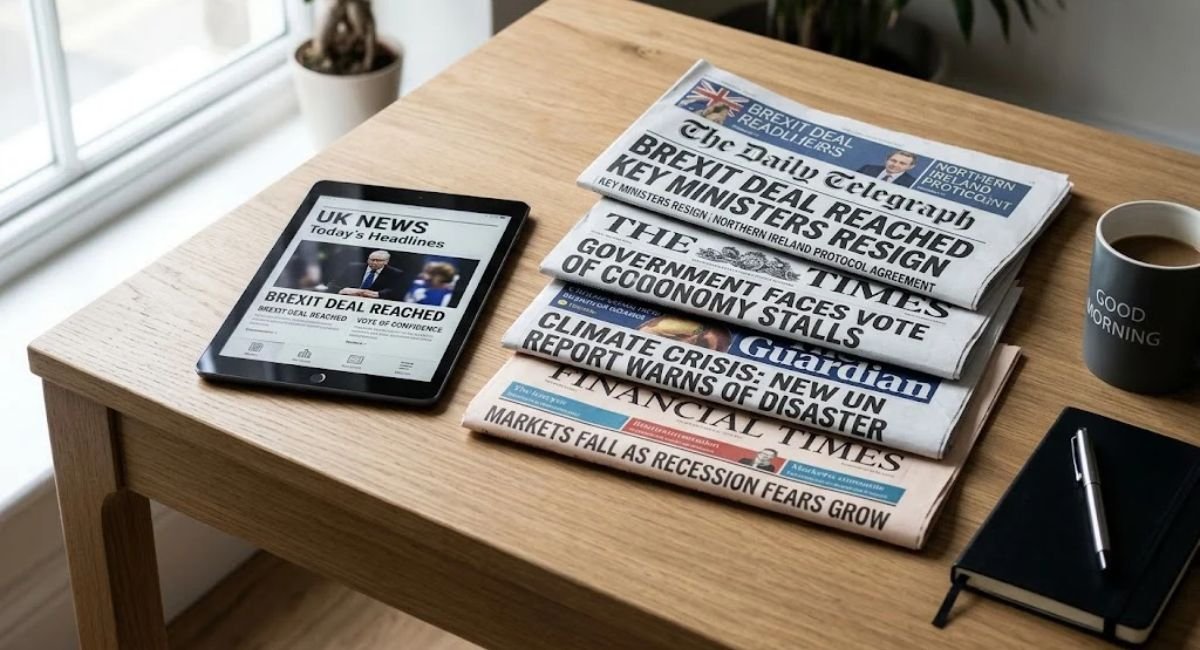
Stay informed with today’s headlines UK and discover the important stories shaping the United Kingdom. From government announcements and political developments to business updates, sports, and major national events, keeping up with the news helps you understand what is happening across Britain.
Explore latest UK news for updates from England, Scotland, Wales, and Northern Ireland. Whether you are searching for breaking news UK or following important changes affecting everyday life, reliable reporting helps you separate verified information from rumors. Our UK news updates bring significant developments together in one convenient place, while British news headlines help you catch up on the stories that matter most throughout the day.
Today’s Headlines UK: The Top Stories to Watch
The most useful morning news summary gives you more than a collection of dramatic titles. It helps you understand what happened, who is affected, and what could happen next.
Here are several important stories appearing in UK coverage on 24 October 2026.
1. Storms Bring More Wind and Rain Across Britain
Severe weather remains a major story this weekend. Storm Austen brought strong winds, power cuts, and travel disruption to parts of the UK on Friday. Reports described thousands of homes losing electricity, while some schools and transport services experienced disruption.
A second named storm, Storm Boelo, is expected to bring further difficult conditions to parts of the country. Weather warnings and their timing can change, so people planning journeys should check the latest official forecasts.
The practical lesson is simple: a headline about a storm is not enough to make travel decisions. Check the warning for your particular area, confirm your train or flight status, and allow extra time when necessary. You can follow updates through the Met Office and official transport providers. Source: The Guardian’s Storm Austen coverage.
2. Government Encourages Households to Prepare for Emergencies
Emergency preparedness is another prominent UK story. On 23 October, the government encouraged households to keep essential supplies at home for emergencies, including bottled water and non-perishable food.
The advice forms part of a wider preparedness campaign. Officials have highlighted risks associated with severe weather, cyber incidents, and other unexpected disruptions.
For ordinary households, preparation does not need to be complicated. Knowing where to find a torch, keeping essential contact details available, and following official guidance can make an unexpected disruption easier to manage.
Read the original reporting from Reuters for more context on the announcement.
3. Inflation and Household Costs Remain in Focus
The cost of living continues to attract attention because it affects everyday decisions, from grocery shopping to household energy use.
UK inflation rose to 3.5% in September 2026, compared with 3.1% in August, according to figures reported by Reuters. Higher fuel prices contributed to the increase.
Inflation measures how quickly prices are rising overall. It does not mean every product becomes more expensive at the same rate, and it does not automatically mean that every household experiences the same financial pressure.
For readers, the important questions are whether prices are continuing to rise, what is driving the change, and whether new government or Bank of England decisions could affect household finances.
You can follow official economic releases through the Office for National Statistics and monetary-policy announcements through the Bank of England. Source: Reuters’ report on UK inflation.
4. The Upcoming Budget Is Under Scrutiny
Economic news is also being shaped by the upcoming UK Budget, scheduled for 28 October 2026 according to recent reporting.
Budgets matter because government decisions can influence taxation, public spending, business conditions, and the services people rely on. However, proposed measures and confirmed policies are not the same thing.
When following Budget coverage, look carefully at whether an announcement is an official decision, a proposal, or simply an expectation from analysts. This distinction helps prevent confusion when several reports discuss the same issue from different angles.
For confirmed announcements, the government’s official website is a useful starting point: GOV.UK.
5. The UK Invests in AI Biosecurity Research
Technology has also made the news. A government announcement published on 24 October described plans for an AI Biosecurity Lab, backed by up to £300 million in government funding and company commitments.
The proposed facility is intended to use artificial intelligence to help strengthen the UK’s ability to respond to biological threats.
This is an example of technology news that reaches beyond phones, computers, and consumer gadgets. AI can also be applied to scientific research, public safety, and complex problems that require researchers to analyse large amounts of information.
The important questions to watch are how the project will operate, what safeguards will be used, and what results it eventually delivers. The UK government’s news website provides official announcements and further details.
These stories represent a snapshot of current coverage, not a complete or permanent list of the day’s headlines. New developments may change their importance as the day progresses.
Where to Read Today’s UK News Online
Finding headlines is easy. Choosing dependable sources is the part that requires more care.
A practical approach is to use a small number of trusted news outlets rather than opening every result that appears in a search.
BBC News
BBC News is useful for UK politics, regional reporting, weather developments, public services, and breaking news. Its UK section helps readers find stories affecting different parts of the country.
If a headline concerns a specific city or region, check whether the report contains local details rather than assuming the same situation applies nationwide.
Sky News
Sky News offers live reporting, video coverage, and developing stories. It can be useful when an event is unfolding and you want updates beyond a single written article.
Live coverage can change quickly, so check the timestamps and look for later corrections or developments.
ITV News
ITV News covers national stories alongside regional reporting. This can help you understand how a major announcement affects people in different parts of Britain.
For local incidents, regional reports may contain practical information that a national headline does not include.
Reuters
Reuters is another useful source for UK and international developments, particularly business, economics, and government policy.
Its reporting can help you compare the details of a story with coverage from other news organisations.
GOV.UK and the Met Office
Not every important update needs to come from a news organisation.
Use GOV.UK to check official government announcements and the Met Office for weather warnings and forecasts. For train journeys, check the relevant train operator or National Rail rather than relying solely on a general news report.
The best source depends on the question you need answered.
How to Check Today’s Headlines UK in Five Simple Steps
You can build a useful morning news routine without spending an hour scrolling.
Step 1: Start With a National News Homepage
Open a trusted source such as BBC News or Sky News. Scan the main headlines and identify two or three stories that appear especially important.
Do not feel that you must read every article. Start with the subjects most likely to affect your day, such as weather, transport, public services, or major government decisions.
Step 2: Read Beyond the Headline
A headline is designed to attract attention and summarise a story in very little space. It cannot always explain the full situation.
Open the article and look for the date, the main facts, the people or organisations involved, and any important qualifications.
For example, a headline saying that a storm is approaching does not tell you whether your particular area has a warning or whether your journey will be affected.
Step 3: Check the Time of Publication
This is especially important when searching for breaking news.
An article published yesterday may still appear near the top of search results today. Its original information might be accurate, but newer developments could have changed the situation.
Look for labels such as “updated,” “live,” or a clearly displayed publication time. If the story is developing, revisit the article before sharing it.
Step 4: Confirm Important Claims
When a story could affect your travel plans, safety, or understanding of a government decision, look for confirmation from an appropriate source.
For a weather warning, check the Met Office. For a government policy, check the official announcement. For an economic statistic, look for the relevant ONS release.
Comparing reports can also help, but remember that several websites may repeat information from the same original source. Three articles do not necessarily mean three independent confirmations.
Step 5: Check Again Later
Some headlines remain important throughout the day, while others are quickly overtaken by new information.
A quick check around lunchtime or in the evening can help you catch major developments without repeatedly refreshing your phone.
This approach is particularly useful for live news, severe weather, transport disruption, and developing political stories.
How to Get UK Breaking News Alerts on Your Phone
You do not need expensive equipment or a special news subscription to follow headlines.
A standard smartphone, tablet, or computer is enough for most readers. Here are a few practical options.
News apps: Install an official app from a trusted publisher, such as BBC News, if it is available for your device. You can use its news sections and available notification settings to follow important developments.
Google News: Visit Google News to browse coverage from multiple publishers. Its topic-based layout can help you compare reporting, although the order of stories is not a guarantee of accuracy or importance.
Browser bookmarks: If you prefer not to install more apps, bookmark your favourite news homepages. Open them directly when you want an update instead of relying on random social media posts.
Weather and travel apps: For a specific journey, use the relevant transport operator’s official service. For weather warnings, consult the Met Office website or its official app where available.
One useful tip is to keep notifications selective. If every app sends alerts for every minor development, you may start ignoring the messages that genuinely matter.
Common Mistakes to Avoid When Reading UK Headlines
Following the news should make you better informed, not more confused. A few simple habits can help.
Believing a Headline Without Reading the Story
A short headline can leave out important context. Read the article before deciding what it means, especially when it discusses public policy, money, or an ongoing incident.
Treating Old News as New
Search engines and social platforms sometimes show older reports beside fresh ones. Always check the date and whether the information has been updated.
Sharing Unverified Social Media Posts
A dramatic post may spread widely before its claims have been confirmed. Check the original source and look for reliable reporting before forwarding it to friends or family.
Confusing Predictions With Confirmed Decisions
News reports often discuss what might happen next. An expected policy change, an analyst’s forecast, and an official announcement are three different things.
Look for the evidence supporting a claim rather than assuming that a confident headline makes it certain.
Following Only One Publisher
Every news organisation makes editorial choices about which stories receive attention. Reading more than one reputable source can give you a broader picture.
You do not need to compare every article. For major stories, checking one additional source is often a useful starting point.
Why a Morning News Summary Is Useful
A quick headline check can help you plan your day more confidently.
If severe weather is expected, you can review your journey before leaving home. If a major government announcement is scheduled, you can understand what it concerns before hearing opinions about it. If economic figures are released, you can read the underlying statistics rather than relying on a social media summary.
A morning news routine is also helpful when you live outside the UK but want to follow British developments. Students, travellers, people with family in Britain, and readers interested in UK business or politics can use online news sources to keep up with events from almost anywhere.
The key is to match the source to your purpose. A live news page is useful for developing events, an official website is better for confirming a policy, and a local report may provide more detail about a regional incident.
Frequently Asked Questions
What are today’s headlines UK readers should check first?
Start with major national developments, severe weather warnings, transport disruption, government announcements, and economic news. The most relevant stories depend on where you live and what you need to know that day.
Where can I read UK news for free?
BBC News, ITV News, Sky News, the Guardian’s website, Reuters’ website, and official government pages provide online news coverage. Access to particular articles or features can vary, and some publishers may limit free reading.
How can I follow UK breaking news live?
Visit a reputable news website’s live coverage page or use an official news app. Check timestamps frequently because information can change as an event develops.
Is Google News a reliable place to check headlines?
Google News can help you discover reports from different publishers, but it is an aggregation service rather than a guarantee that every headline is accurate. Open the original article, check its date, and verify important claims.
How often should I check the news?
There is no fixed rule. A short morning check and another later in the day may be enough for general awareness. For an urgent weather or travel issue, consult the relevant official service when you need the latest information.
How do I know whether a UK news story is up to date?
Check the publication date, any update label, and whether newer reporting is available. For rapidly changing stories, confirm the latest details with a reliable news organisation or the appropriate official source.
Final Thoughts
Keeping up with today’s headlines UK does not have to become another full-time task. A few minutes with reliable sources can help you understand the main developments without getting lost in endless notifications.
Start with a trusted news homepage, read the stories that matter to you, and verify important details before acting on them. Use official weather, government, and transport sources whenever you need specific information.
Most importantly, remember that a headline is the beginning of a story, not the whole story. A little context and a quick check of the facts can make your morning news routine far more useful.