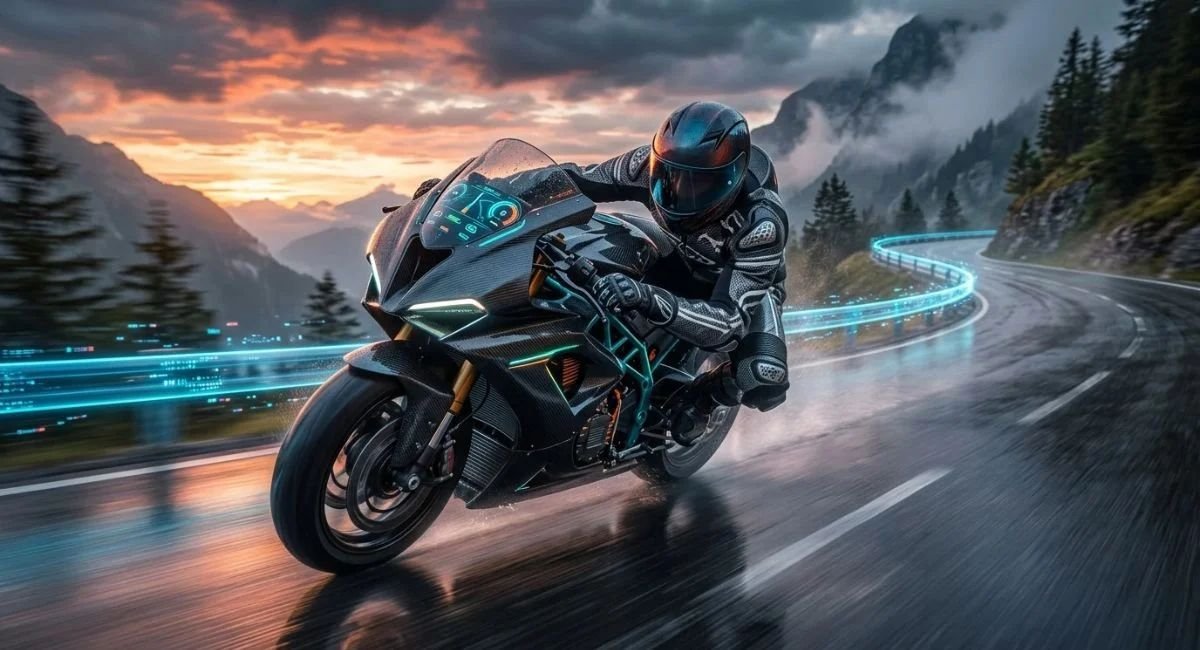
Say “moto tech” to a rider and you might get two different answers. One person pictures the technician in the back of a dealership, hands covered in grease, listening to an engine and knowing exactly what’s wrong. Another thinks of the technology itself: electronic rider aids, smarter engines, electric bikes.
Both are the same world seen from different angles, and this guide covers both. We’ll look at what a motorcycle technician does, how to train for the job, what it pays, and which technologies are changing the bikes they work on.
What Does “Moto Tech” Mean?
The Two Common Meanings
A UK professional profile states that the work involves troubleshooting and part replacement in addition to normal maintenance on motorcycles, scooters, mopeds, and ATVs. Technicians use hand tools and automated diagnostic equipment, consult technical manuals, advise clients on necessary repairs, and provide time and cost estimates.
Why They Belong Together
As bikes get more computerized, the person fixing them needs to understand software and diagnostics as well as wrenches. A modern technician is part mechanic and part troubleshooter, which is why the job and the tech can’t really be separated anymore.
What is the true job of a motorcycle technician?
The Day-to-Day
According to a UK professional profile, the employment entails troubleshooting and part replacement in addition to routine maintenance on motorcycles, scooters, mopeds, and ATVs. Technicians follow technical manuals, advise clients on necessary repairs, and provide time and cost estimates in addition to employing automated diagnostic equipment and hand tools.
Where They Work
Technicians are employed by race teams, independent shops, dealerships, and manufacturers of custom bikes. Some specialize in a single brand. Others focus on racing bikes, from trail and dirt bikes to speedway and Grand Prix machines. Opportunities to work on police-model motorcycles are also mentioned by the Motorcycle Mechanics Institute, a training facility in the United States.
Career Development
Eventually, a technician could become a senior or master technician and some might take on administrative duties like recruiting, planning, and training of staff.
How to Be a Motorcycle Mechanic
Option 1: Trade School
In the US, organizations like Universal Technical Institute (UTI) and Motorcycle Mechanics Institute (MMI) offer motorcycle technician schools. MMI describes a two-step structure: a core training program covering key motorcycle technology, followed by a manufacturer-specific program such as Kawasaki’s K-Tech Specialist. With two locations for motorcycle instruction in Arizona and Florida, UTI offers hybrid training that combines in-person practical lab sessions with online lectures. Since these are organizations outlining their own projects, carefully consider the expenses, results, and employment opportunities before registering.
Choice 2: Apprenticeships
In the UK, a contemporary apprenticeship typically lasts three years and entails both academic study and hands-on instruction at a college or training institution. Trainees seek credentials such as SVQ in Motorcycle Maintenance and Repair in addition to the three stages of IMI motorcycle certification: Service Maintenance Technician, Diagnostic Technician, and Master Technician.
Becoming a certified MOT tester with additional training is an additional choice.
Manufacturer Certifications
Training and manufacturer-specific certifications, like those from Harley-Davidson, Honda or Yamaha, can help a technician stand out, according to UTI’s career guidance. Dealerships often value brand training because it means you can work on their specific models from day one.
Skills That Help
- Mechanical aptitude and patience
- Comfort with diagnostic software and electronics
- Clear communication with customers
- A real passion for bikes, ideally including riding experience
- A motorcycle licence and often a car licence, which a UK profile notes may be essential
How Much Do Motorcycle Technicians Earn?
UK Examples
Pay varies by country, region, employer and experience. A UK career profile says newly qualified technicians tend to earn around £18,000 a year, rising to roughly £22,000 up to over £30,000 with experience. Current UK job listings show higher figures for experienced dealership roles, including one posting at £40,000 to £44,000, another at £33,000 to £35,000 and a role in the electric vehicle industry at £26,000 to £37,000. Those are examples from specific adverts, not guarantees.
U.S. Figures
According to one salary source, motorcycle mechanics in the US typically make between $42,656 and $53,733, with a median salary of about $48,011. For the most latest figures, see a recent reference, as that handbook was published in 2024.
What Moves the Needle
- Experience and diagnostic skill
- Manufacturer certifications
- Specializing in high-demand areas like electric or performance bikes
- Where you live and what type of shop you work for
The Technology Changing Motorcycles Right Now
Electronics and Rider Aids
Cycle Trader’s 2026 trend roundup notes a shift toward technology that lowers the barrier for new riders. For example, Honda has added its E-Clutch technology to the entry-level Rebel 300 cruiser. An Italian business paper’s look at 2026 bikes adds that electronics are becoming more common but designed to support riders without changing the riding experience, especially for newer riders.
Engines and Emissions
The same Il Sole 24 Ore piece says combustion engines will keep a leading role, refined for efficiency and low-rev torque while meeting Euro 5+ regulations. For technicians, that means learning more complex fuel injection, engine management and emissions systems.
Competition From New Brands
Cycle Trader also highlights the continuing rise of Chinese brands, noting CFMoto’s 1000MT-X adventure bike with a 947cc parallel-twin. More brands means more variety to service and learn.
Electric Motorcycles
In the backdrop, electrification is expanding, and some companies are already posting job openings for technicians in the electric vehicle industry. Although the rate of adoption varies by location, this indicates that training in battery systems and high-voltage safety could be a wise career investment.
A Note on the Industry Climate
It’s not all smooth riding. Cycle Trader says motorcycle sales were down again in 2025 because of economic factors, even as new models keep arriving. If you’re planning a career, it’s worth following the market in your area.
What About Online “Moto Tech” Articles?
Be careful with generic pages that make bold claims about “the definitive industry benchmark” or invented buzzwords. While researching, I found several pages promoting an unexplained “Motorcycle Maxx” trend with no named sources or real products. If a page does not identify the author, the data source, or the exact objects it refers to, you should treat it with suspicion.
Is Moto Tech a Good Career?
The Upsides
- Hands-on work that turns a passion into a profession
- Clear paths for specialization and advancement
- Skills that transfer to other vehicles and powersports
- Opportunities from racing to custom shops
The Honest Challenges
- Pay can start modestly
- The work is sometimes seasonal and physically taxing.
- Technology is always changing, therefore you have to keep learning.
- Market conditions can affect hiring
Who Thrives
People who are curious, careful and calm under pressure tend to do well. If you enjoy figuring out why something isn’t working, this might be your world.
FAQs
What is a moto tech?
It usually refers to a motorcycle technician, who is in charge of diagnosing, repairing, and maintaining motorcycles. It can also be used to characterize motorbike technology in general.
How can I work as a motorcycle technician?
Apprenticeships, manufacturer-specific training, and trade school programs are typical paths. A three-year apprenticeship combined with college coursework is common in the UK, although schools like MMI and UTI in the US provide specialized programs.
How long does motorcycle technician training take?
It depends on the route. A UK apprenticeship usually lasts about three years. School programs vary, and some may take over a year, according to UTI.
How much do motorcycle technicians make?
It varies by country and experience. In the UK, experienced dealership jobs pay between £33,000 and £44,000, while entry-level jobs pay around £18,000. One American source claims that the median is almost $48,000. Verify the most recent local facts.
Is a motorcycle license required?
It can be helpful and sometimes essential. A UK profile says both a motorcycle licence and a car driving licence are useful and may be required.
Do motorcycle technicians need to know electronics?
Increasingly, yes. Computerized diagnostic equipment is part of the job, and newer bikes include more electronic rider aids and engine management systems.
Are electric motorcycles creating new jobs?
Some employers are already advertising technician roles in the electric vehicle industry, so training in electric systems can open extra doors.
Is the motorcycle industry growing?
Mixed signals. Despite the ongoing introduction of new models and innovations, Cycle Trader says that sales declined once more in 2025.
Can I concentrate on only one brand?
Yes. Many technicians are experts in specific manufacturers or in fields like electric motorcycles, police bikes, or racing.
Leave a Reply